Description
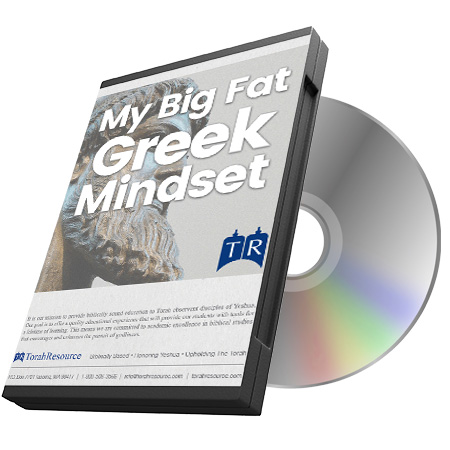
This lecture series focuses on the worldview of first-century Judaism, giving you a new pair of “glasses” to view the Scriptures through. With just a bit of historical and theological background to first-century Judaism, the Scriptures open up in totally new ways. Tim Hegg takes a look at philosophical beliefs that helped shape the Western mindset and has, in effect, steered the religious outlook of the Church. He then takes a look at the Hebraic and Eastern outlook and how it differs from the modern mindset.
This six-part lecture series is a wonderful introduction to studying the Word of God, or for those who are looking to understand more about philosophy. This series has also been used by homeschoolers with kids at junior and senior high levels.
6 audio lectures in MP3 format.
Lecture 1: This first lecture in the foundational series by Tim Hegg sets the groundwork for the rest of the series and looks at the influence Plato had on the western mindset. Tim Hegg guides us through the historical realities of viewing the world through Platonic thought and how this has effected our interpretation of the Bible.
Lecture 2: In this second lecture from the series, Tim Hegg looks at the difference between a Hebraic worldview and a Greek worldview. These two different approaches become important for how we approach the Scriptures which were written by people in an Eastern culture who were writing from a Hebraic perspective. Understanding this perspective helps the Bible student understand the biblical writings in a much clearer way.
Lecture 3: In this third lecture of the series, Tim Hegg attempts to get his audience to think outside the Western mindset “box” we have been put in and think within the “Hebraic” box which the writers of the Scriptures have written in. This paradigm shift is one that helps better understand the writings of the Scriptures and see the Bible within its historical and grammatical context.
Lecture 4: This fourth teaching in the series explores the biblical purpose of human existence by contrasting two worldviews: the “cathedral mentality” (a Greek-influenced view that the goal is to escape this physical world for a heavenly one) and the “temple mentality” (the Hebrew view that God’s purpose is to dwell among His people on earth). The speaker argues that the “Kingdom of Heaven” refers to God’s reign, not a celestial location, and that the kingdom is both already present and not yet fully realized. The session examines key texts (John 14, John 18:36, 2 Timothy 4:18, Ezekiel 37–43, Revelation) to reframe familiar passages, discusses the sacred name of God and its significance, and concludes with practical applications — calling listeners to live as citizens of God’s kingdom now, prepare for the Messianic reign on earth, prioritize discipleship and community life, and pass Torah to the next generation.
Lecture 5: Tim Hegg critiques the traditional Greek-influenced Christian view that divides humans into body, soul, and spirit, where the physical is treated as evil and only the spirit as good. This framework, popularized by authors like Watchman Nee and Witness Lee, frames the believer as a “spiritual schizophrenic” — torn between an evil old man (body and soul) and a righteous new man (spirit), with God working while the believer simply stays passive. Hegg contrasts this with a Hebrew/ Torah-based worldview in which the physical and non-physical are both capable of good and evil. He walks through biblical uses of “flesh” to show it can mean physical body, mortal humanity, human life, or sinful nature — and that the body is God’s good creation, not inherently evil. From there, he draws wide-ranging practical applications: clothing, food, marital relations, public sanitation, healthcare, building safety, car maintenance, speed limits, protecting the vulnerable (children, pregnant women, the elderly, the disabled), and personal spiritual disciplines are all spiritual matters.
Lecture 6: In this final teaching in the series, Tim Hegg explores the Hebrew understanding of the human person as a unified whole—body, soul, and spirit working together—contrasted with the Greek tendency to split the physical from the spiritual. Key topics include what “spiritual” means biblically (aligned with God’s Spirit, not merely non-physical), how “soul” and “spirit” function as near-synonyms throughout Scripture, and the practical implications for sanctification. The session also distinguishes justification (God’s work alone) from sanctification (the believer’s active cooperation with God), using a WWII “mopping-up operations” analogy to illustrate how the old self has been crucified with Messiah while remaining sinful tendencies must still be confronted. Practical disciplines—Torah obedience, prayer, community, and daily decisions to say no to the flesh—are emphasized as the means of growing in holiness.



Reviews
There are no reviews yet.